 By Vikas Thori · Updated 20 November 2026
Stand on a pavement while an ambulance goes past and you will hear its siren drop in pitch at the moment it passes you, a sort of “eeee-ooow”. The driver hears no such drop. The siren is playing exactly the same notes the whole time. The change happens between the vehicle and your ears, and it is called the Doppler effect.
(best with headphones at low volume: the sound moves from left to right)
Sound is a series of pressure waves
A siren speaker pushes air back and forth hundreds of times a second. Each push sends out a pressure wave that travels away at the speed of sound, which is about 343 metres per second in air at 20 °C. The number of waves that reach your ear each second is the frequency you hear, measured in hertz. More waves per second sounds higher; fewer sounds lower.
What movement does to the waves
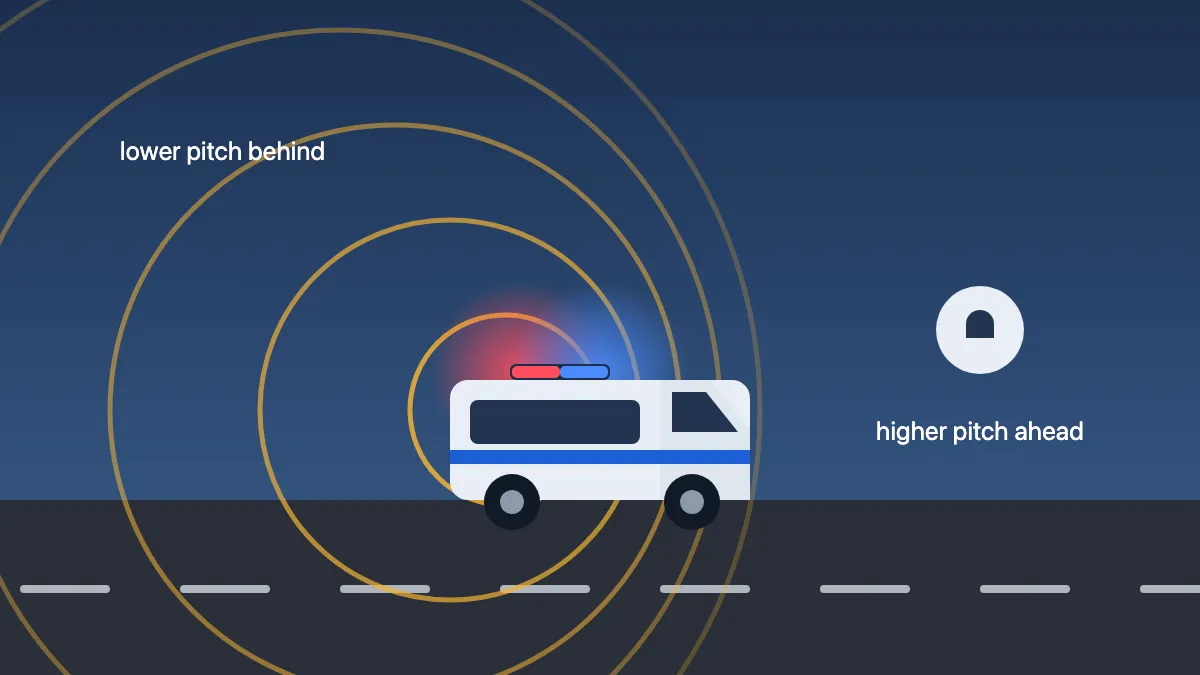
When the siren is moving towards you, each new wave is sent out from a point a little closer to you than the last one. The waves arrive bunched up, so more of them reach you each second than the siren is actually producing. You hear a higher note.
Once it has passed and is moving away, each new wave starts from a little further away. The waves arrive stretched out, fewer per second reach you, and you hear a lower note. The picture at the top of this page shows the idea: rings crowded together in front of the vehicle, spread apart behind it.
The effect is named after the Austrian physicist Christian Doppler, who described it in 1842. A few years later, in 1845, the Dutch scientist Christophorus Buys Ballot tested it with sound in a memorable way: musicians played a steady note on a moving train while trained listeners beside the track noted the pitch they heard.
The numbers
For a sound source moving straight towards or away from a listener who is standing still, the heard frequency is:
f heard = f siren × c ÷ (c − v) when approaching, and f siren × c ÷ (c + v) when moving away,
where c is the speed of sound (about 343 m/s) and v is the vehicle's speed in metres per second.
| Vehicle speed | 700 Hz siren, approaching | Same siren, moving away | Drop as it passes |
|---|---|---|---|
| 36 km/h (10 m/s) | about 721 Hz | about 680 Hz | about 1 semitone |
| 72 km/h (20 m/s) | about 743 Hz | about 661 Hz | about 2 semitones |
| 108 km/h (30 m/s) | about 767 Hz | about 644 Hz | about 3 semitones |
So a vehicle at city speed shifts the note by roughly one or two steps on a piano. That does not sound like much on paper, but your ear is very good at noticing a sudden change in pitch, which is why the “eeee-ooow” is so recognisable.
Why the drop is sudden, not gradual
The formula above is for a vehicle coming straight at you. On a real road you are standing to the side. What matters is how fast the vehicle is getting closer to you, not its full speed. When it is far away, almost all of its speed is towards you, so the note is at its highest. As it comes level with you, it is moving across your line of sight instead of towards you, and the shift falls to zero for an instant. A moment later it is moving away and the note is at its lowest.
The closer you stand to the road, the faster that switch happens. Standing right at the kerb, the pitch seems to flip almost instantly. From a balcony a hundred metres away, the slide down is slow and gentle. The pass-by demo on this page models a listener about six metres from a vehicle at 72 km/h.
Why the driver hears no change
The Doppler effect depends on movement between the source and the listener. The crew inside the vehicle move with the siren, so the waves reach them at exactly the rate the siren produces them. To them, the wail sounds the same in traffic, on a bridge or parked outside a hospital.
The same applies the other way round. If you are in a car driving towards a parked ambulance with its siren on, you will hear a higher pitch while you approach and a lower one after you pass it, even though the ambulance is not moving.
Is the change in loudness also Doppler?
Partly no. A siren gets louder as it comes near mainly because you are closer to it, and quieter as it leaves for the same reason. Buildings, other vehicles and the shape of the street also change what you hear, which is why a siren in a city can seem to jump around. The Doppler effect is only the change in pitch.
Where else the Doppler effect shows up
- Trains and racing cars: the classic “neeeow” of a car going past on a track is the same effect.
- Weather radar: Doppler radar measures how fast rain is moving towards or away from the station from the shift in the reflected radio waves.
- Speed cameras and medical scans: police radar guns and Doppler ultrasound use the same principle with radio and sound waves.
- Astronomy: light from galaxies moving away from us is shifted towards red, one of the key observations behind the idea that the universe is expanding.
Try it yourself
Play the pass-by demo above with headphones at a low volume, then try the plain wail on the main player. The siren notes are identical; the only difference in the pass-by is the pitch shift, the change in loudness, and the movement from left to right. Teachers are welcome to use the page in class.
Sources
- Doppler effect for sound — HyperPhysics, Georgia State University
- The Doppler effect — The Physics Classroom
- Doppler effect — Wikipedia (history, Buys Ballot experiment)
- Speed of sound — Wikipedia
Works for Viral Herb, a herbs company based in Dehradun, and manages and writes for PoliceSirenSound.com.
Spotted a mistake? Tell us.
Read next
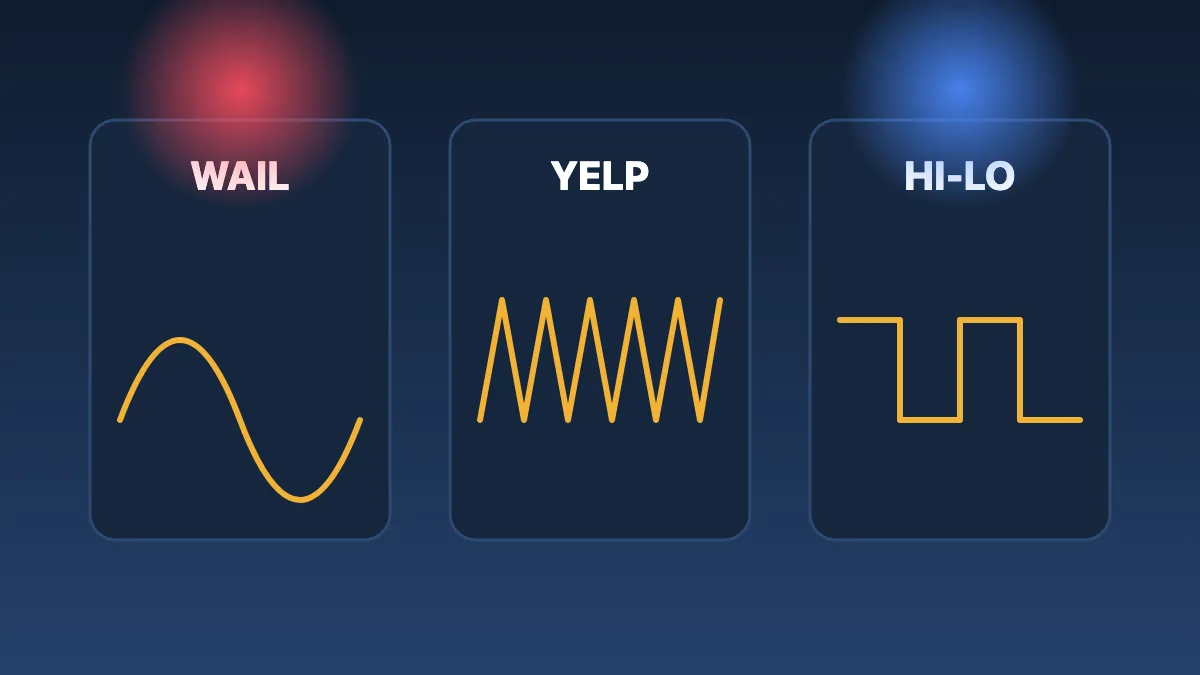
Wail, yelp, hi-lo: what each siren sound means
Why an emergency vehicle switches from a slow wail to a fast yelp, with each pattern you can play.
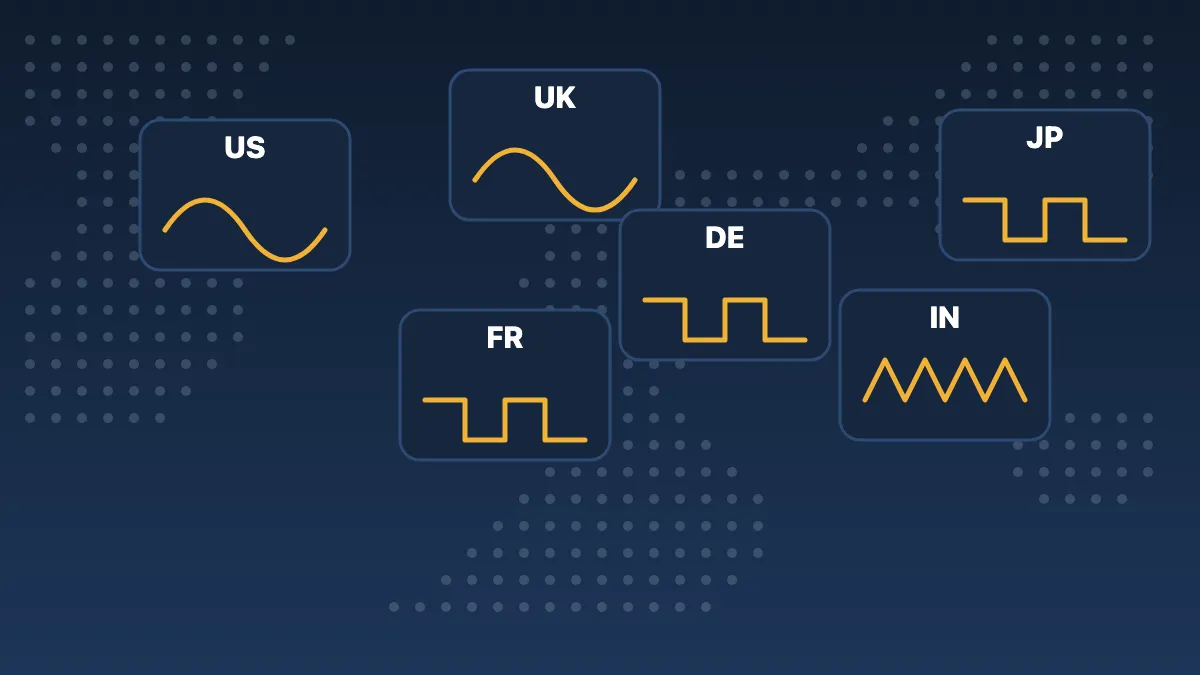
Siren sounds by country: why Europe goes “nee-naw” and the US wails
US wail, German Martinshorn, Japanese hi-lo and the rules on Indian roads.
Siren sounds for videos, games and pranks: how to use them responsibly
Fine for videos and lessons, never while driving: a short guide to using siren sounds safely.


